
How to Choose the Right Mechanical Seal Materials for Your Pump Application
Learn how to choose the right seal face and elastomer materials based on temperature, chemistry, abrasion, and fluid type.
Choosing the right mechanical seal material helps prevent leaks, reduce downtime, and improve seal life. The best combination depends on what is being pumped, operating temperature, chemical compatibility, and whether the application involves abrasion, contamination, or pressure.
This guide explains common seal face combinations, elastomer upgrades, and when to use each one so you can make a more confident material selection for your pump application.
For clean water and neutral pH applications, a standard carbon and ceramic face combination with Buna-N elastomers is often the default choice.
FKM (Viton) is commonly used for higher-temperature and more aggressive chemical environments, but compatibility should always be verified.
Silicon carbide vs. silicon carbide is a strong option for abrasive, contaminated, or chemical-rich environments where wear resistance matters.
| Seal Face / Elastomer Combination | Best Use Case | Temperature | Notes |
|---|---|---|---|
| Carbon / Ceramic + Buna-N | Clean water, neutral pH, general-purpose use | Under 200°F | Most common default setup |
| Carbon / Ceramic + FKM (Viton) | Bleach and aggressive chemicals | Up to 450°F | Verify chemical compatibility |
| Carbon / Ceramic + EPDM | Caustic fluids, hot water, glycol systems | Up to 300°F | More economical than FKM |
| Carbon / Silicon Carbide | Higher temp and pressure applications | High | Low friction and durable |
| Carbon / Tungsten Carbide | High pressure and impact-prone service | High | Strong impact resistance |
| Silicon Carbide / Silicon Carbide | Abrasive or chemical-rich environments | High | Excellent wear resistance |
| Carbon / Ni-Resist or Stainless Steel | Diesel, oil, glycol, lubricating fluids | Varies | Not ideal for water-only service |
Get the full mechanical seal material selection chart in a printable format.
Get Free Material Selection ChartStandard materials are commonly used for general-purpose sealing in clean water, light chemical, and non-aggressive environments.
- Rubber parts: Buna / Nitrile
- Metal parts: 304 stainless steel
- Seal faces: Carbon with ceramic
- Best for temperatures under 200°F
- Best for liquids near neutral pH
- Not ideal for abrasive service such as sand or soil
A higher-performance elastomer upgrade commonly used where stronger chemical resistance and higher temperature capability are needed.
- Up to 450°F
- Good for bleach and aggressive chemicals
- Stronger chemical resistance than Buna-N
- Best for more demanding chemical service
A cost-effective elastomer alternative often used in hot water, steam, caustic, and glycol-based systems.
- Up to 300°F
- Good for hot water and steam
- Works well with caustic solutions and glycol systems
- Common in circulator and OEM systems
A common combination for clean water, neutral pH, and lower-temperature applications under 200°F.
A good fit for higher pressure applications where stronger impact resistance is important.
One of the best choices for abrasive fluids, wastewater, slurry, and chemical-rich service where wear resistance matters.
Used with lubricating fluids like diesel, oils, and glycols. Not recommended for water-only service because performance drops in non-lubricating conditions.
Start with the fluid, temperature, and whether the application is abrasive or chemical-heavy. If you are still unsure, it is better to confirm material compatibility before ordering than to risk premature seal failure.
Seal House can help you choose the right seal faces and elastomers for your pump, fluid, and operating conditions.
A standard carbon and ceramic combination with Buna-N elastomers is often the most common starting point for clean water and neutral pH service.
Upgrade when your application involves higher temperatures or chemicals that standard Buna-N is not suited for. FKM is often chosen for more aggressive chemicals, while EPDM is common for hot water, steam, and caustic service.
Silicon carbide vs. silicon carbide is a strong choice where abrasion, slurry, wastewater, or contaminated fluids are involved.
Not usually. Carbon vs. Ni-Resist or stainless combinations are better suited to lubricating fluids like diesel, oils, and glycols.
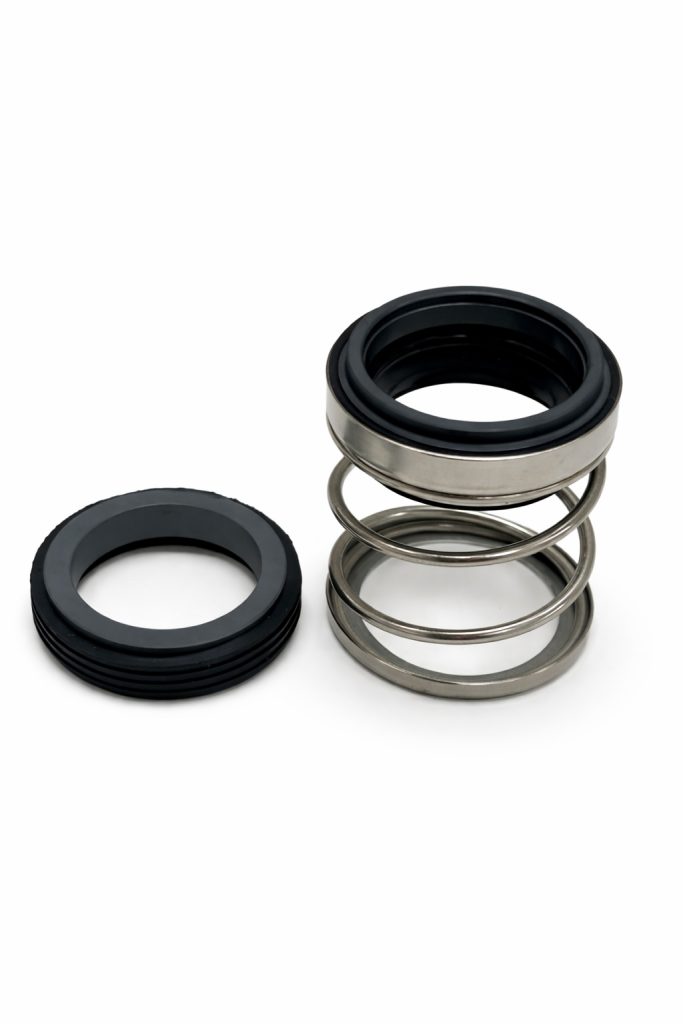
1. Mechanical Seals
Shaft seals used to prevent fluid leakage along rotating shafts in pumps, mixers, and other mechanical systems