
How to Choose the Right Mechanical Seal Materials for Your Pump Application
Mechanical Seal Material Selection Guide
Choosing the right mechanical seal material is crucial for performance, longevity, and safety. This guide outlines common material combinations and when to use them, including a quick reference chart.
Quick Reference Chart
| Combination | Best Use Case | Temp Rating | Notes |
|---|---|---|---|
| Seal Faces: Carbon & Ceramic Elastomers: Buna-N | Clean water, neutral pH, low temp | less than 200°F | Default setup |
| Seal Faces: Carbon & Ceramic Elastomers: FKM (Viton) | Bleach, aggressive chemicals | less than 450°F | Check chemical compatibility |
| Seal Faces: Carbon & Ceramic Elastomers: EPDM | Caustic fluids, glycol systems | less than 300°F | More economical than Viton |
| Seal Faces: Carbon & Silicon Carbide | High temp/pressure | High | Low friction, durable |
| Seal Faces: Carbon & Tungsten Carbide | High pressure + impact resistance | High | Great for shock-prone installs |
| Seal Faces: Silicon Carbide & Silicon Carbide | Abrasive & chemical-rich environments | High | Strong wear resistance |
| Seal Faces: Carbon & Ni-Resist/SS | Diesel, oil, glycol (lubricating) | Varies | Only 30% of standard rating in non-lube conditions |
Standard Materials (Default Option)
This is the most commonly used option for general-purpose sealing with clean water, light chemicals, and non-aggressive environments.
- Rubber Parts: typically Buna / Nitrile
- Metal Parts: 304 Stainless Steel
- Seal Faces: M106K grade Carbon (or better) with Ceramic (99%+ purity)
- Applications:
- Temperatures under 200°F
- Liquids with Neutral pH or close to it
- Fluids without abrasive materials like sand or soil
Material Upgrade Alternatives for Elastomers
FKM (Viton from Dupont)
- Rubber Parts/Elastomer Upgrade (vs standard Buna-N)
- Temperature Range: Up to 450°F
- Chemical Resistance: Excellent, especially for solutions like bleach
- Notes:
- Greater chemical resistance than Buna
- Ideal for aggressive or high-temp chemical environments
- Be sure to verify chemical compatibility before choosing
EPDM
- Rubber Parts/Elastomer Alternative (vs standard Buna-N)
- Temperature Range: Up to 300°F
- Applications:
- Hot water and steam
- Caustic solutions
- Closed-loop systems with glycol or rust inhibitors
- Notes:
- More cost-effective than FKM
- Common in OEM circulator systems
Material Upgrades for Seal Faces
Carbon vs. Ceramic (CAR/CER)
- Face Combination CAR/CER
- Performance:
- Clean water, neutral pH, low temp
- less than 200°F
- Best For:
- Clean water, neutral pH, low temp
- Clean water, neutral pH, low temp
Carbon vs. Tungsten Carbide
- Face Combination CAR/TUN
- Notes:
- Similar high pressure performance as silicon
- Slightly softer than silicon in abrasion resistance
- Superior impact resistance – great for rough handling or tight installs
Silicon Carbide vs. Silicon Carbide (SIC/SIC)
- Face Combination SIC/SIC
- Performance:
- High wear and chemical resistance
- Low friction and strong in abrasive or contaminated applications
- Best For:
- Wastewater
- Slurry and abrasive applications
Carbon vs. Ni-Resist / Stainless Steel
- Face Combination CAR/SS
- Application:
- Must be used with lubricating fluids like diesel fuel, oils, or glycols
- Not suitable for water-only service as its not a lubricating liquid
- Limitations:
- Performance is reduced to ~30% of the seal’s normal rating
- Metal seats are softer and wear faster in poor lubrication environments
Let us know if you’d like help selecting the right material for your application!
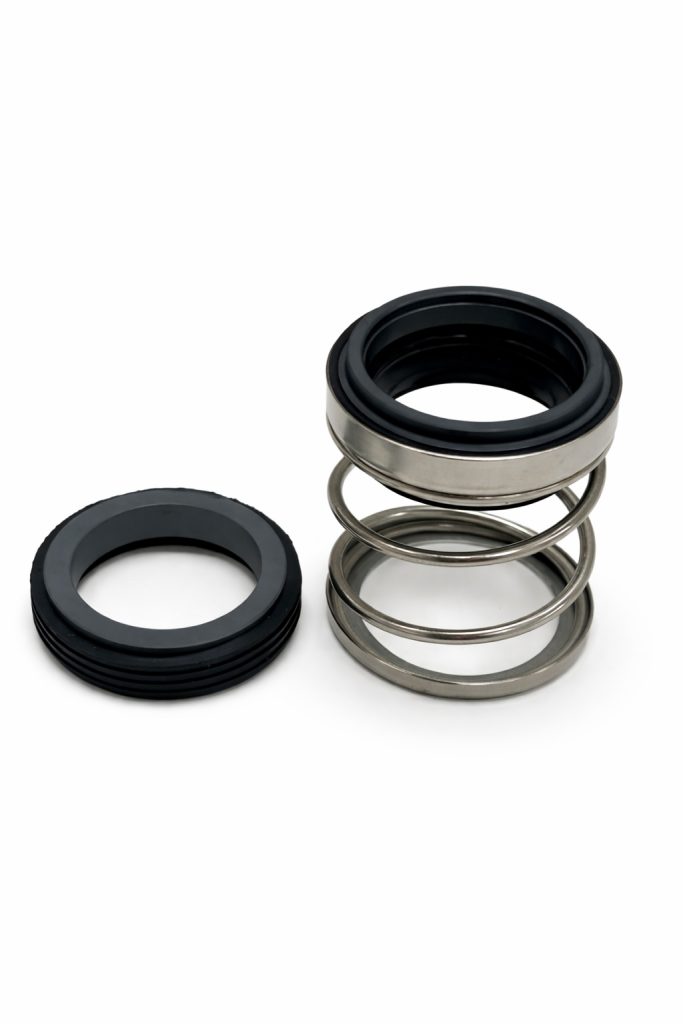
1. Mechanical Seals
Shaft seals used to prevent fluid leakage along rotating shafts in pumps, mixers, and other mechanical systems